
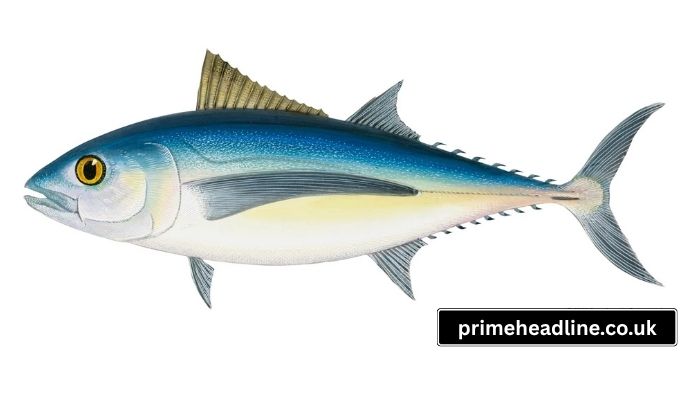
Finlet meaning sparks curiosity the moment you hear it a diminutive term that packs a powerful punch in the world of marine biology. Imagine slicing through the ocean at breakneck speeds, where every ripple and current demands precision. That’s exactly where these unassuming little fins shine, acting as nature’s secret stabilizers for some of the fastest creatures in the sea. Whether you’re a curious angler spotting them on a fresh-caught tuna or a science enthusiast diving into fish anatomy, understanding finlet meaning opens a window into evolutionary brilliance that feels almost magical.
Far from random flaps of skin, finlets are highly specialized structures that challenge what we think we know about fish locomotion. They appear as a series of small, rayless, non-retractable fins lined up along the tail section of certain species, quietly working behind the scenes to reduce drag and enhance maneuverability. Creative minds often liken them to the spoiler on a sports car or the tiny winglets on an airplane subtle additions that deliver outsized performance gains. In the sections ahead, we’ll explore every facet of finlet meaning with vivid detail, from their precise anatomical placement to their surprising influence on modern engineering.
By the end of this deep dive, you’ll never look at a mackerel or yellowfin the same way again. The finlet meaning isn’t just a dictionary entry; it’s a story of adaptation, hydrodynamics, and human ingenuity borrowing from the deep blue. Get ready to discover why these tiny fins matter more than their size suggests and how they continue to inspire innovations on land, sea, and even in the air.
Finlet Meaning Explained The Basic Definition and Etymological Roots
Finlet meaning starts with simplicity: it refers to a little fin or one of the parts of a divided fin, specifically the small, detached rays or rayless structures found in certain fish. Dictionaries across the board, from Merriam-Webster to specialized ichthyology sources, describe it as a diminutive extension—literally “fin” plus the suffix “-let” indicating something small or lesser. This etymology dates back to the 1870s, when naturalists first documented these features in mackerel-like species, blending everyday language with scientific precision.
What makes finlet meaning so intriguing is its laser focus on function over flash. Unlike the large, showy dorsal fins that catch the eye, finlets are modest players positioned strategically between the main dorsal or anal fins and the powerful tail fin. They are non-retractable and often lack the bony rays seen in other fins, giving them a streamlined, almost feather-like appearance that blends seamlessly with the fish’s body. Creative analogies abound think of them as the fringe on a scarf that flutters just enough to guide airflow without adding bulk.
In practical terms, finlet meaning extends beyond a single structure to an entire series of these small fins, typically appearing in pairs along the dorsal and ventral (belly) sides of the caudal peduncle—the narrow section before the tail. This arrangement creates a unique hydrodynamic profile that scientists have studied for decades. Whether you’re researching for a school project or simply satisfying curiosity, grasping this core definition unlocks deeper appreciation for how evolution fine-tunes every detail for survival.
Ultimately, finlet meaning captures nature’s genius in miniaturization. These tiny features prove that big impacts often come in small packages, setting the stage for everything from evolutionary success stories to cutting-edge bio-inspired designs.
Anatomy of Finlets Where They Appear and How They Function in Fish
The anatomy behind finlet meaning reveals a masterpiece of biological engineering located precisely where it matters most: along the rear half of high-performance fish. In species like tuna, mackerel, and bonito, you’ll find anywhere from five to ten small finlets trailing behind the second dorsal fin and the anal fin, hugging the narrow caudal peduncle. These are not random growths; they are rayless, non-retractable, and perfectly aligned to interact with the water flow generated by the fish’s powerful tail thrusts.
Picture a sleek yellowfin tuna rocketing through the ocean its finlets act like miniature guides, channeling turbulent water into smoother streams right before it reaches the caudal fin. This placement is no accident; it minimizes drag and prevents energy-wasting eddies from forming. Creative observers compare the setup to a row of tiny sails on a racing yacht, each one fine-tuning the vessel’s course with effortless grace. In mackerels, the finlets often display subtle coloration that matches the body, providing camouflage while delivering functional benefits.
Functionally, these structures enhance stability during explosive bursts of speed. When a fish accelerates or turns sharply, the finlets help maintain a level body position, reducing the tendency to roll or yaw. Studies of scombrid fishes (the mackerel and tuna family) show that finlets contribute to overall propulsion efficiency by interacting with the boundary layer of water hugging the body. It’s a creative symphony of physics and biology working in perfect harmony.
This detailed anatomy underscores why finlet meaning resonates with both anglers and scientists. Spotting those distinctive little fins on a fresh catch instantly signals you’re dealing with a high-speed ocean predator built for endurance and agility.
Evolutionary Significance of Finlets Nature’s Speed Adaptations
Finlet meaning takes on epic proportions when viewed through the lens of evolution. These small fins evolved in fast-swimming pelagic fish—those that roam the open ocean—because every ounce of energy saved translates into survival advantages. Over millions of years, species in the Scombridae family refined this trait, turning what might have started as minor fin extensions into sophisticated tools for outpacing predators and chasing prey across vast distances.
Creative evolutionary narratives liken finlets to the gradual development of racing stripes on a cheetah: subtle refinements that yield massive performance edges. In tunas, which can reach speeds of 50 miles per hour, finlets help manage the intense water turbulence created by their crescent-shaped tails. Without them, drag would increase dramatically, sapping the energy needed for long migrations or sudden hunting strikes. This adaptation appears convergently in other speedy fish like sauries, highlighting nature’s repeated endorsement of the finlet design.
The evolutionary story also explains their rayless, rigid structure. Unlike flexible fins that bend and flap, finlets maintain a fixed position, acting as passive flow-control devices. Fossil evidence and comparative anatomy suggest this trait emerged alongside the development of endothermy (warm-bloodedness) in some tunas, allowing sustained high-speed cruising in cooler waters. It’s a beautiful example of how finlet meaning embodies millions of years of trial-and-error perfection.
By appreciating this evolutionary context, we gain fresh respect for finlet meaning. These tiny features aren’t mere decorations they’re hard-won victories that helped shape entire marine ecosystems.
Hydrodynamic Wonders How Finlets Enhance Swimming Efficiency
Diving deeper into finlet meaning reveals their hydrodynamic magic: they act as natural vortex controllers, smoothing chaotic water flow to reduce drag and boost forward thrust. Computational fluid dynamics models of tuna swimming show that finlets strategically placed along the body disrupt harmful eddies, channeling water into cleaner streams that hug the tail fin more effectively. The result? Up to noticeable improvements in swimming efficiency, allowing fish to travel farther on less energy.
Creatively, imagine finlets as underwater traffic directors, politely guiding turbulent currents away from the main propulsion system. In real-world observations, yellowfin and skipjack tunas with prominent yellow-edged finlets demonstrate superior burst speeds and endurance during feeding frenzies. The ventral and dorsal rows work in tandem, creating balanced lift and preventing unwanted rolling motions even at top velocities. This efficiency is so refined that engineers now study it for vehicle design.
Temperature and water conditions further amplify these benefits. In warmer tropical seas where many finlet-equipped species thrive, the structures help dissipate excess heat while maintaining hydrodynamic advantages. Anglers targeting mackerel often note how these fish dart and change direction with uncanny precision—thanks in large part to the subtle guidance provided by their finlets.
Understanding this hydrodynamic role cements finlet meaning as far more than a technical term. It’s a testament to nature’s elegant problem-solving, proving that small anatomical tweaks can yield profound performance gains in the harshest environments.
Finlet Meaning Beyond Biology Bio-Inspired Engineering and Cultural References
Finlet meaning has leaped from ocean depths into human innovation, inspiring “finlet rails” and similar passive flow-control devices in aerodynamics and engineering. Researchers have developed bio-mimetic surfaces mimicking fish finlets to reduce trailing-edge noise on aircraft wings, wind turbines, and even high-speed trains. These applications can cut aerodynamic noise by several decibels, demonstrating how a simple marine adaptation translates into quieter, more efficient technology.
Creative crossovers abound: just as finlets stabilize a tuna’s tail, engineered versions stabilize airflow over modern vehicles. Recent studies on finlet fences and canopies show promising results in noise mitigation, turning a biological curiosity into a sustainable engineering solution. Meanwhile, in popular culture, finlet meaning pops up unexpectedly like in word games such as NYT Connections, where “finlet” cleverly disguises the word “inlet” through clever letterplay, delighting puzzle solvers worldwide.
This broader relevance keeps finlet meaning fresh and relevant. From marine conservation efforts that highlight the importance of protecting speedy pelagic species to design labs borrowing nature’s blueprints, the concept continues to evolve. It reminds us that the ocean’s smallest details often hold the biggest lessons for humanity.
In every context, finlet meaning bridges the ancient and the cutting-edge, proving nature’s designs remain timeless sources of inspiration.
Conclusion
Finlet meaning encompasses far more than a simple dictionary entry it reveals the hidden engineering marvels that propel ocean speedsters and spark human creativity across disciplines. From their precise anatomical placement and evolutionary refinement to their hydrodynamic brilliance and modern technological applications, these tiny fins embody nature’s genius for efficiency and adaptation. Whether you’re exploring fish anatomy, solving word puzzles, or envisioning quieter aircraft, understanding finlet meaning enriches your perspective on the interconnected world of biology and innovation. Next time you encounter a tuna or mackerel, take a moment to appreciate those unassuming little finlets they’re tiny powerhouses with an outsized story to tell. Embrace the wonder, and let finlet meaning inspire your own curiosity about the natural world.
FAQs
- What is the finlet meaning in simple terms? Finlet meaning refers to a small, specialized fin or series of small fins found on certain fish, particularly between the main fins and the tail, designed to improve swimming performance.
- Where do finlets appear on fish? Finlets are located on the caudal peduncle, forming rows behind the second dorsal and anal fins in species like tuna, mackerel, and bonito.
- Do all fish have finlets? No—finlets are characteristic of fast-swimming scombrid fishes such as tunas and mackerels, not common in slower or freshwater species.
- What is the purpose of finlets in fish? Finlets reduce drag, control water flow, and enhance stability and efficiency during high-speed swimming.
- How does finlet meaning relate to evolution? Finlet meaning highlights an evolutionary adaptation that helped pelagic fish achieve remarkable speeds and endurance over millions of years.
- Are finlets the same as dorsal fins? No, finlets are smaller, rayless, and positioned separately from the main dorsal fin, serving distinct hydrodynamic roles.
- Can finlets be seen with the naked eye? Yes, they are clearly visible as small projections along the tail section of fish like yellowfin tuna or Atlantic mackerel.
- Is finlet meaning used outside of biology? Yes, the concept inspires engineering solutions like finlet rails for noise reduction in aerodynamics and vehicle design.
- Why do some puzzles use “finlet” as a clue? In games like NYT Connections, “finlet” serves as a playful twist on “inlet,” adding an extra letter to fit wordplay categories.
- How can understanding finlet meaning help anglers or marine enthusiasts? Recognizing finlets quickly identifies high-performance species and deepens appreciation for the fish’s swimming capabilities and ecological role.