









How do brooms affect the stone’s path in Olympic curling? This question sits at the heart of one of the most fascinating and misunderstood elements of the sport. To the untrained eye, sweeping might look like frantic brushing on ice but in reality, it is a precise, strategic, and scientifically grounded technique that can determine victory or defeat.
Curling, often called “chess on ice,” relies heavily on teamwork, communication, and physics. While the thrower delivers the stone, it is the sweepers who subtly but significantly control its final destination. From altering speed to reducing curl, the broom plays a far more powerful role than most spectators realize. In this article, we’ll dive deep into the mechanics, science, and strategy behind sweeping, revealing exactly how brooms affect the stone’s path in Olympic curling.
The Physics Behind Curling: Understanding Stone Movement
To fully understand how brooms affect the stone’s path in Olympic curling, we must first examine how a curling stone moves across the ice. Unlike a simple sliding object, a curling stone rotates as it travels, creating a curved trajectory known as “curl.” This motion is influenced by friction between the stone and the ice surface.
How Do Brooms Affect the Stone’s Path in Olympic Curling? The ice used in curling is not perfectly smooth. It is covered with tiny droplets of frozen water called “pebble.” These bumps reduce the surface area in contact with the stone, allowing it to glide more efficiently. However, they also introduce friction, which interacts with the stone’s rotation to create its signature curved path. Without this textured surface, curling would behave more like bowling straight and predictable.
How Do Brooms Affect the Stone’s Path in Olympic Curling? The amount of curl depends on several factors, including the speed of the stone, its rotation, and the condition of the ice. Slower stones tend to curl more because they spend more time interacting with the ice. This is where sweeping comes into play: by modifying the ice conditions in real time, sweepers can directly influence how much the stone curls and how far it travels.
How Sweeping Changes Friction and Ice Conditions
At its core, sweeping is about controlling friction. When players sweep the ice in front of a moving stone, they generate heat through rapid, forceful brushing. This heat slightly melts the ice surface, creating a thin layer of water that reduces friction.
Reduced friction has two major effects on the stone’s path. First, it allows the stone to travel farther by maintaining its speed. Second, it decreases the amount of curl, causing the stone to follow a straighter trajectory. This dual impact is what makes sweeping such a powerful tool in curling strategy.
Modern research has shown that effective sweeping can raise the ice temperature by a small but significant margin just enough to alter the stone’s behavior. Elite curlers apply considerable downward force while sweeping, sometimes exceeding 40–50 pounds of pressure, to maximize this effect. The combination of speed, pressure, and technique determines how effectively the broom can influence the stone.
Controlling Speed: Extending or Shortening the Shot
How Do Brooms Affect the Stone’s Path in Olympic Curling? One of the most important ways brooms affect the stone’s path in Olympic curling is by controlling its speed. A stone that is slowing down too quickly can be “rescued” by aggressive sweeping, allowing it to travel further than it otherwise would.
When sweepers notice that a stone is underthrown meaning it lacks sufficient speed they immediately begin sweeping to reduce friction and preserve momentum. This can make the difference between a stone stopping short of the target and reaching the desired position in the house.
Conversely, if a stone is thrown too hard, sweeping is minimized or avoided altogether. In some cases, players may even intentionally stop sweeping to allow friction to slow the stone down more quickly. This delicate balance requires constant communication between the thrower, skip, and sweepers, as decisions must be made within seconds.
Speed control through sweeping is especially critical in draw shots, where precision is key. A slight misjudgment can result in a stone being out of play or perfectly positioned to score. By mastering sweeping techniques, teams can fine-tune their shots with remarkable accuracy.
Reducing or Enhancing Curl: Precision Shot-Making
Another crucial aspect of how brooms affect the stone’s path in Olympic curling is their ability to influence curl. As mentioned earlier, sweeping reduces friction, which in turn reduces the amount of curl. This allows players to “hold the line,” keeping the stone on a straighter path.
For example, if a stone is starting to curl too much toward one side, sweepers can intensify their efforts to counteract this movement. By reducing friction in front of the stone, they limit its sideways motion and guide it closer to the intended target. This is particularly important in tight situations where a few inches can determine the outcome of a game.
Interestingly, sweeping cannot increase curl directly. However, by choosing not to sweep—or by sweeping less aggressively players can allow the natural friction of the ice to take effect, resulting in more pronounced curling. This strategic decision-making adds another layer of complexity to the sport.
Advanced teams also use directional sweeping techniques, focusing their efforts on one side of the stone’s path to subtly influence its trajectory. While the primary effect is still friction reduction, these nuanced methods demonstrate the high level of skill and precision required at the Olympic level.
The Evolution of Curling Brooms and Technology
The role of brooms in curling has evolved significantly over time, further enhancing their impact on the stone’s path. Traditional corn brooms have largely been replaced by modern synthetic brushes designed for maximum efficiency and control.
Today’s curling brooms feature specialized brush heads made from high-tech fabrics that optimize friction reduction. These materials are engineered to generate more heat and provide better grip on the ice, allowing players to exert greater influence on the stone’s movement.
However, this technological advancement has also sparked controversy. In recent years, concerns have been raised about “directional fabrics” that may provide an unfair advantage by altering the stone’s path more than intended. As a result, governing bodies have introduced regulations to standardize broom materials and ensure fair play.
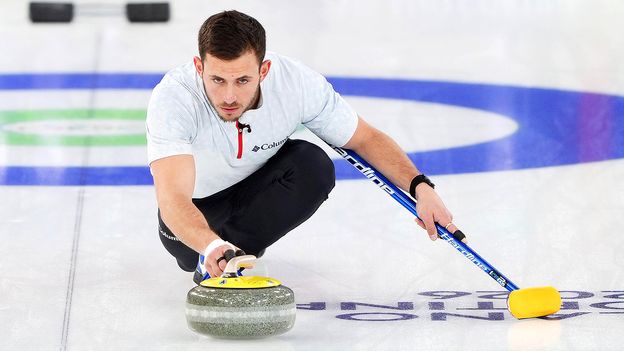
Despite these changes, the fundamental principle remains the same: the broom is an essential tool for controlling the stone’s speed and direction. As technology continues to evolve, so too will the strategies and techniques used by elite curlers.
Teamwork and Communication: The Human Element of Sweeping
While physics and technology play crucial roles, the human element cannot be overlooked when discussing how brooms affect the stone’s path in Olympic curling. Sweeping is a team effort that requires precise coordination and communication among players.
The skip, who stands at the target end, directs the sweepers based on their reading of the ice and the stone’s trajectory. Sweepers must respond instantly to commands, adjusting their intensity and positioning in real time. This dynamic interaction is what makes curling such a strategic and engaging sport.
Effective communication ensures that everyone is on the same page, reducing the risk of errors. For example, a delay in sweeping or a misunderstanding of instructions can lead to a missed shot. At the Olympic level, where margins are razor-thin, these details can make all the difference.
Ultimately, sweeping is not just about physical effort it is about timing, judgment, and teamwork. The best teams in the world excel at combining these elements to achieve consistent and precise results.
Conclusion How Do Brooms Affect the Stone’s Path in Olympic Curling?
So, how do brooms affect the stone’s path in Olympic curling? The answer lies in a combination of physics, technique, and teamwork. By reducing friction through sweeping, players can control both the speed and curl of the stone, guiding it toward its intended destination with remarkable precision.
From extending a stone’s travel distance to minimizing its sideways movement, the broom is an indispensable tool in the sport of curling. Its impact goes far beyond what meets the eye, transforming what might seem like a simple game into a complex and strategic battle on ice.
As you watch the next Olympic curling match, pay close attention to the sweepers you’ll see that every stroke of the broom plays a vital role in shaping the outcome of the game.
How Do Brooms Affect the Stone’s Path in Olympic Curling?
Johan Gottlieb Gahn: The Untold Story of the Chemist Who Discovered Manganese
FAQs How Do Brooms Affect the Stone’s Path in Olympic Curling?
1. How do brooms affect the stone’s path in Olympic curling?
Brooms reduce friction on the ice, allowing the stone to travel farther and curl less, resulting in a straighter path.
2.How do brooms affect the stone’s path in Olympic curling? Does sweeping make the stone go faster?
Yes, sweeping helps maintain the stone’s speed by reducing friction, effectively allowing it to travel further.
3. How do brooms affect the stone’s path in Olympic curling?Can sweeping change the direction of the stone?
Sweeping cannot directly change direction, but it can reduce curl, which influences the stone’s final path.
4. How do brooms affect the stone’s path in Olympic curling? Why do curlers sweep so aggressively?
Aggressive sweeping generates more heat and reduces friction more effectively, giving better control over the stone.
5. Can sweeping slow down a stone?
No, sweeping generally prevents slowing. To reduce speed, players simply stop sweeping.
6. How do brooms affect the stone’s path in Olympic curling? What is the “curl” in curling?
Curl refers to curved path of the stone caused by its rotation and interaction with the ice surface.
7. Do all curling teams use the same type of broom?
Most teams use similar modern synthetic brooms, but materials are regulated to ensure fairness.
8. How much pressure do players apply when sweeping?
Elite players can apply 40–50 pounds of downward force while sweeping.
9. Does ice condition affect sw eeping effectiveness?
Yes, factors like temperature and pebble quality can influence how effective sweeping is.
10. How do brooms affect the stone’s path in Olympic curling?Is sweeping more important than the throw?
Both are crucial. The throw sets the initial path, while sweeping fine-tunes and controls the outcome.