









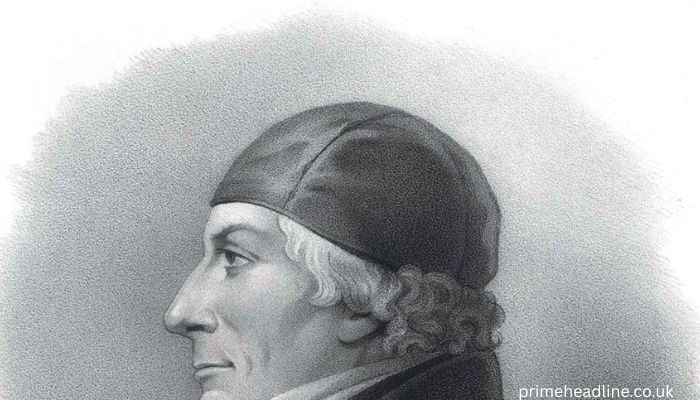
Johan Gottlieb Gahn is a name that quietly shaped the world of chemistry and metallurgy, yet remains less recognized than many of his contemporaries. Born in 18th-century Sweden, Gahn played a crucial role in scientific discoveries that transformed both theoretical chemistry and industrial practices. His groundbreaking work on manganese and phosphorus laid the foundation for modern metallurgy and chemical science.
Despite his remarkable contributions, Gahn’s modest personality and reluctance to publish widely meant that his achievements often remained overshadowed. However, his collaborations with prominent scientists and his innovations in mineral analysis and metal processing make him a fascinating figure in scientific history. This article explores the life, discoveries, and enduring influence of Johan Gottlieb Gahn in depth.
Early Life and Education of Johan Gottlieb Gahn
Johan Gottlieb Gahn was born on August 19, 1745, in Voxna, Sweden, during a period of rapid scientific advancement in Europe. From an early age, he displayed a keen interest in natural sciences, particularly chemistry and mineralogy. His upbringing in a region rich in natural resources likely influenced his fascination with metals and minerals.
Gahn pursued his education at Uppsala University, one of Sweden’s leading academic institutions. There, he studied under influential chemists, including Torbern Bergman, a pioneer in analytical chemistry. This mentorship played a critical role in shaping Gahn’s scientific approach, emphasizing precision, experimentation, and practical applications.
During his time at Uppsala, Gahn also formed a close relationship with fellow chemist Carl Wilhelm Scheele. This collaboration would later prove instrumental in several important discoveries, particularly in the study of phosphorus and mineral compounds. His academic foundation set the stage for a career that would blend theoretical chemistry with industrial innovation.
Discovery of Manganese and Scientific Breakthroughs
One of the most significant achievements of Johan Gottlieb Gahn was the discovery of manganese as a distinct element in 1774. By reducing manganese dioxide with carbon, he successfully isolated manganese in its metallic form, marking a major milestone in chemistry.
This discovery was groundbreaking because it expanded the understanding of chemical elements during a time when the periodic table was still in its infancy. Manganese would later become essential in steel production and various industrial applications, highlighting the long-term impact of Gahn’s work.
In addition to manganese, Gahn contributed to the study of phosphorus. Alongside Carl Wilhelm Scheele, he demonstrated that bones contain calcium phosphate and developed methods to extract phosphorus from bone ash. This discovery was crucial in shifting phosphorus production from rare sources to more abundant biological materials.
Gahn’s work exemplifies the transition from alchemy to modern chemistry. While earlier scientists like Hennig Brand discovered phosphorus through experimental curiosity, Gahn approached chemical research with a more systematic and scientific methodology.
Contributions to Metallurgy and Industrial Innovation
Beyond laboratory discoveries, Johan Gottlieb Gahn made significant contributions to metallurgy, particularly in improving copper-smelting techniques. After settling in Falun, a major mining center in Sweden, he worked extensively on refining processes that enhanced efficiency and output.
His innovations were not limited to theory; they had direct industrial applications. By optimizing smelting methods, Gahn helped boost Sweden’s mining industry, which was a vital part of the country’s economy. His work demonstrated how scientific research could be applied to solve real-world problems, bridging the gap between academia and industry.
Gahn also played a role in establishing factories for producing materials such as sulfur and vitriol. These contributions expanded the scope of chemical manufacturing and opened new avenues for industrial growth. His ability to integrate scientific knowledge with practical applications made him a key figure in the early development of industrial chemistry.
Collaboration with Prominent Scientists and Influence
Johan Gottlieb Gahn’s influence extended beyond his own discoveries through his collaborations with other leading scientists of his time. His close association with Carl Wilhelm Scheele and Torbern Bergman created a powerful network of intellectual exchange that drove innovation in chemistry.
Interestingly, Gahn was known for sharing his findings freely with colleagues rather than publishing them himself. While this generosity advanced scientific progress, it also meant that he did not receive full recognition for many of his contributions. His notes and observations were often preserved and published by others, including Jöns Jacob Berzelius, one of the founders of modern chemistry.
This collaborative spirit highlights an important aspect of scientific advancement the collective effort. Gahn’s willingness to share knowledge helped accelerate discoveries in chemical analysis and mineralogy. His work on the blowpipe, a tool used for analyzing minerals, became an essential technique in chemistry and geology.
Despite his understated presence, Gahn’s influence can be seen in the achievements of his peers and successors. His contributions laid the groundwork for future developments in chemical science, even if his name did not always take center stage.
Legacy and Lasting Impact on Science
The legacy of Johan Gottlieb Gahn is deeply embedded in both chemistry and industry. His discovery of manganese alone has had far-reaching implications, as the element is now widely used in steel production, batteries, and various chemical processes. His work continues to influence modern technology and manufacturing.
In addition, Gahn’s research on phosphorus played a key role in understanding its biological and industrial importance. The identification of calcium phosphate in bones and the development of methods to extract phosphorus significantly advanced chemical knowledge and production techniques.
A mineral called gahnite (zinc spinel) was named in his honor, reflecting his contributions to mineralogy. This recognition serves as a lasting tribute to his impact on the scientific community.
Perhaps the most remarkable aspect of Gahn’s legacy is his approach to science. He valued collaboration, practical application, and continuous learning. In an era where recognition often depended on publication, Gahn’s quiet dedication reminds us that true innovation is not always accompanied by fame.
Conclusion
Johan Gottlieb Gahn was a pioneering chemist whose contributions continue to shape modern science and industry. From discovering manganese to advancing phosphorus research and improving metallurgical processes, his work had a profound and lasting impact.
Although he may not be as widely known as some of his contemporaries, Gahn’s achievements speak for themselves. His collaborative spirit, practical innovations, and scientific rigor make him a significant figure in the history of chemistry. By exploring his life and work, we gain a deeper appreciation for the foundations of modern science and the individuals who helped build them.
Video Game News PBLinuxTech: Latest Updates, Trends, and Insights in Gaming
FAQs
1. Who was Johan Gottlieb Gahn?
Johan Gottlieb Gahn was a Swedish chemist and metallurgist known for discovering manganese.
2. When was Johan Gottlieb Gahn born?
He was born on August 19, 1745, in Sweden.
3. What is Johan Gottlieb Gahn famous for?
He is best known for isolating manganese and contributing to phosphorus research.
4. How did Gahn discover manganese?
He reduced manganese dioxide with carbon to isolate the metal.
5. Did Johan Gottlieb Gahn work with other scientists?
Yes, he collaborated with Carl Wilhelm Scheele and Torbern Bergman.
6. What were Gahn’s contributions to metallurgy?
He improved copper-smelting processes and contributed to industrial chemistry.
7. Why is Gahn not widely known?
He published little and often shared his findings with others instead.
8. What is gahnite?
Gahnite is a mineral named in his honor.
9. How did Gahn contribute to phosphorus research?
He helped identify calcium phosphate in bones and methods to extract phosphorus.
10. What is Johan Gottlieb Gahn’s legacy?
His work laid the foundation for modern chemistry, metallurgy, and industrial processes.