
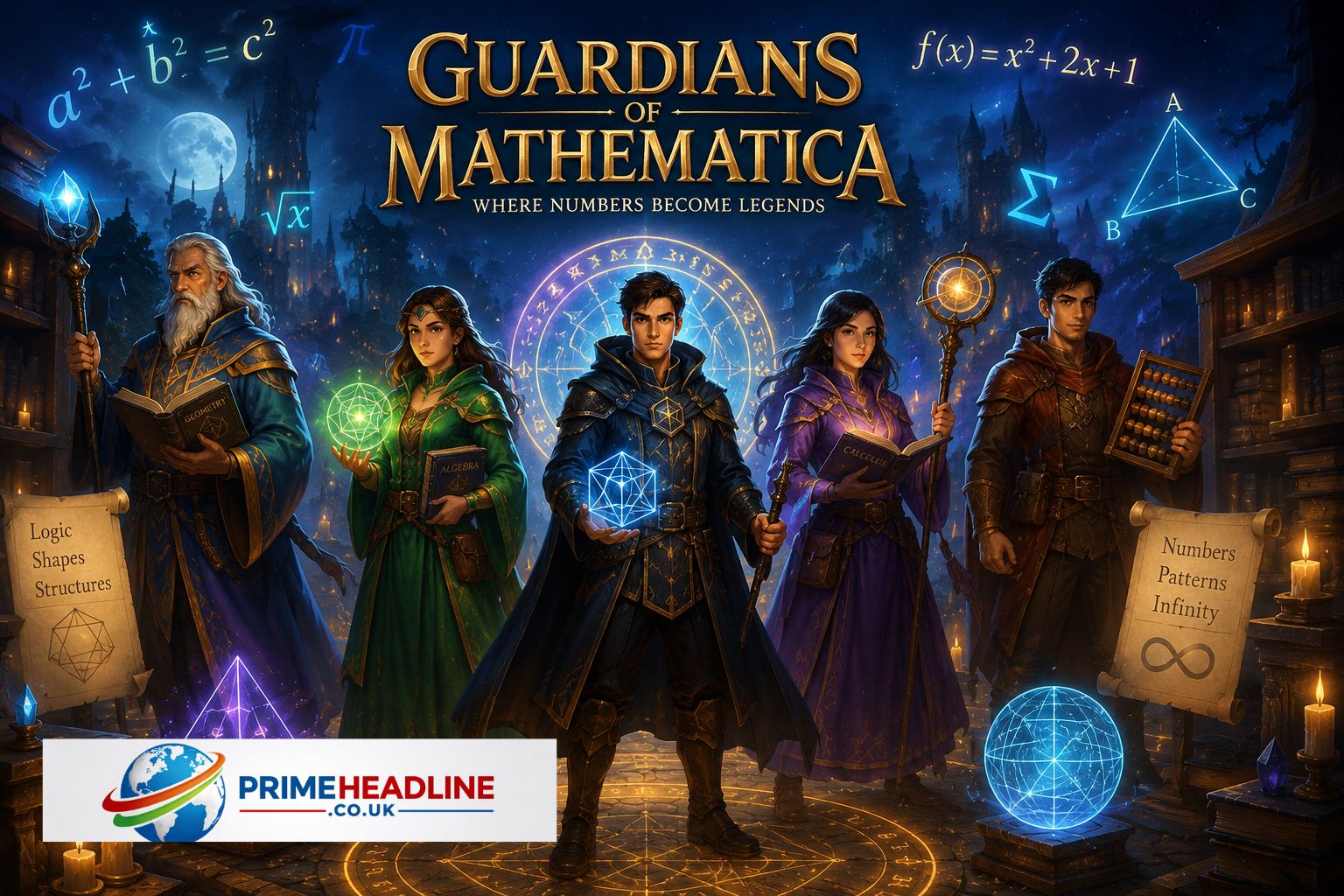
In a world where mathematics often strikes fear into the hearts of students, Guardians of Mathematica emerges as a beacon of hope, adventure, and learning. Imagine a universe where numbers are not mere symbols on a page but living, breathing entities that power entire civilizations. Picture yourself as a heroic guardian, tasked with protecting the realm of Mathematica from chaos, disorder, and the dreaded Void of Ignorance. This is not just another math tutorial or a dry educational app — it is a fully immersive experience that bridges the gap between fantasy storytelling and rigorous mathematical education. Whether you are a struggling student, a curious learner, or an educator seeking innovative tools, Guardians of Mathematica offers something truly extraordinary.
The concept behind Guardians of Mathematica is as brilliant as it is simple: gamify mathematics in a way that feels natural, exciting, and deeply rewarding. By weaving mathematical concepts into an epic narrative of heroism, exploration, and discovery, this educational adventure turns what was once a dreaded subject into a thrilling quest. Players don’t just solve equations — they embark on missions, battle mathematical monsters, unlock ancient theorems, and restore balance to a world built entirely on the foundations of numbers, logic, and patterns. In this comprehensive guide, we will delve deep into every aspect of Guardians of Mathematica, exploring its origins, gameplay mechanics, educational value, and the profound impact it is having on learners around the globe.
What Is Guardians of Mathematica? An Overview of the Educational Phenomenon
Guardians of Mathematica is an innovative educational game designed to make mathematics engaging, accessible, and genuinely fun for learners of all ages. At its core, it is an adventure-based learning platform that transforms mathematical problems into interactive quests, puzzles, and battles. The game is set in the fictional world of Mathematica — a vast, vibrant realm where every kingdom, creature, and challenge is rooted in mathematical principles. From the arithmetic plains of Numeria to the geometric peaks of Shapeland, every corner of this world is designed to teach and reinforce mathematical concepts in a way that feels like play rather than work.
The genius of Guardians of Mathematica lies in its seamless integration of curriculum-aligned mathematics with compelling game design. Players assume the role of young guardians who must protect Mathematica from the forces of the Void a shadowy entity that seeks to erase all knowledge of mathematics from the world. To defend the realm, players must master a wide range of mathematical skills, from basic arithmetic and fractions to algebra, geometry, and even introductory calculus. Each level, quest, and challenge is carefully calibrated to match specific learning objectives, ensuring that players are not only entertained but also genuinely learning and retaining mathematical knowledge as they progress through the game.
The Storyline and World-Building: A Universe Built on Numbers
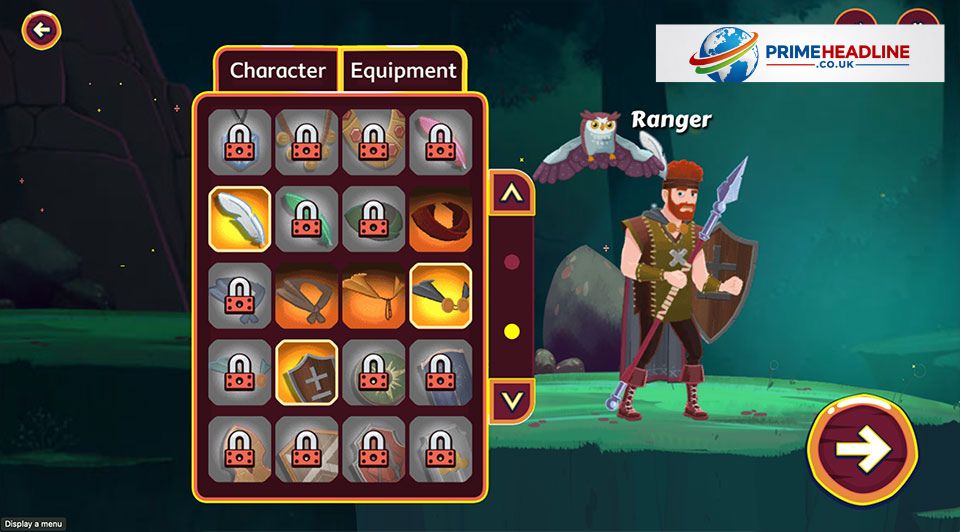
The narrative of Guardians of Mathematica is nothing short of epic. The world of Mathematica was once a harmonious realm where numbers, shapes, and patterns existed in perfect balance. The ancient Order of Guardians — legendary mathematicians who discovered the fundamental truths of the universe — maintained this balance for millennia. However, a dark force known as the Void of Ignorance has begun to spread across the land, corrupting mathematical knowledge and plunging entire regions into numerical chaos. As a newly recruited guardian, the player must journey across diverse kingdoms, each representing a different branch of mathematics, to restore order and defeat the Void once and for all.
The world-building in Guardians of Mathematica is remarkably rich and thoughtfully designed. Each kingdom corresponds to a mathematical domain: Algebraia is the land of unknowns and equations, where players learn to balance scales and solve for mysterious variables. Geometria is a realm of shapes and angles, where players must navigate labyrinthine structures using spatial reasoning and geometric theorems. Calculus Cove challenges players with rates of change and infinite series, while Probability Peninsula introduces the thrilling unpredictability of chance and statistics. The attention to detail in each region is astounding — even the NPCs (non-player characters) are named after famous mathematicians, and the in-game lore is peppered with historical facts and mathematical curiosities that enrich the learning experience.
Gameplay Mechanics: How Mathematics Becomes an Adventure
The gameplay mechanics of Guardians of Mathematica represent a masterclass in educational game design. At the heart of the experience is a quest-based progression system that guides players through increasingly complex mathematical challenges. Each quest presents a scenario that requires mathematical problem-solving to advance — for example, players might need to calculate the trajectory of a catapult to breach a fortress wall, determine the optimal resource allocation to build a bridge, or decode an ancient cipher using algebraic equations. These challenges are not abstract math problems divorced from context; they are embedded in meaningful narratives that give purpose and urgency to every calculation.
Combat in Guardians of Mathematica is equally inventive. Players engage in “Math Battles” against the minions of the Void, where each attack and defense is tied to a mathematical operation. To launch a powerful spell, a player might need to solve a multi-step equation within a time limit. To defend against an incoming attack, they might need to identify the correct geometric property or calculate a probability. The game adapts dynamically to each player’s skill level, using an intelligent algorithm that adjusts the difficulty of problems based on performance. This ensures that the game is never too easy (which would bore advanced learners) nor too difficult (which would frustrate beginners). Additionally, a robust reward system — featuring collectible mathematical artifacts, unlockable character abilities, and achievement badges — keeps players motivated and engaged over the long term.
Educational Benefits: Why Guardians of Mathematica Works
The educational efficacy of Guardians of Mathematica is supported by well-established principles of learning science. Research has consistently shown that gamification the application of game-design elements in educational contexts — significantly increases student engagement, motivation, and retention. Guardians of Mathematica leverages this research by incorporating elements such as immediate feedback, progressive difficulty, narrative immersion, and reward systems, all of which have been proven to enhance learning outcomes. When students are emotionally invested in a story and motivated by game rewards, they are far more likely to persist through difficult challenges and internalize the underlying concepts.
Beyond engagement, Guardians of Mathematica fosters deep conceptual understanding rather than rote memorization. Traditional math education often emphasizes procedural fluency the ability to execute algorithms — at the expense of conceptual understanding. Guardians of Mathematica flips this paradigm by requiring players to apply mathematical concepts in varied, context-rich scenarios. A student who learns about fractions by dividing resources among villagers in the game understands not just how to compute fractions, but why they matter and when to use them. This contextualized learning leads to better transfer of knowledge to real-world situations. Furthermore, the game’s adaptive difficulty ensures that each student receives a personalized learning experience, addressing individual gaps and building on existing strengths — something that is difficult to achieve in a traditional classroom setting.
Who Should Play Guardians of Mathematica? Target Audience and Accessibility
Guardians of Mathematica is designed with remarkable flexibility to serve a wide and diverse audience. Primarily, the game targets students in upper elementary through high school (roughly ages 8 to 18), covering mathematical concepts from basic arithmetic through pre-calculus. However, its appeal extends far beyond this core demographic. Younger children can enjoy the earlier levels with parental guidance, developing early numeracy skills in a playful environment. College students and adult learners who need to brush up on foundational mathematics find the game’s intuitive, self-paced approach invaluable. Even math enthusiasts and casual gamers who enjoy puzzle-solving and strategy games can find plenty to love in the later, more challenging levels.
Accessibility is a cornerstone of the Guardians of Mathematica design philosophy. The game is available on multiple platforms including web browsers, tablets, and smartphones — ensuring that learners can access it regardless of their device preferences. It includes features such as adjustable text sizes, color-blind-friendly modes, audio narration for visually impaired players, and multiple language options. The adaptive difficulty system means that players with varying levels of mathematical proficiency can all find an appropriate challenge level. For educators, the game offers a comprehensive dashboard that tracks student progress, identifies areas of struggle, and generates detailed reports that can inform classroom instruction. This makes Guardians of Mathematica not just a game for individual learners, but a powerful tool for teachers, tutors, and homeschooling parents who want to supplement their curriculum with an engaging, data-driven resource.
Conclusion
Guardians of Mathematica represents a paradigm shift in how we think about mathematics education. By transforming a subject that has historically been associated with anxiety, boredom, and frustration into an epic adventure filled with heroism, discovery, and triumph, it demonstrates the incredible potential of gamified learning. The game’s thoughtful integration of curriculum-aligned content, adaptive difficulty, rich storytelling, and robust accessibility features makes it a standout in the crowded field of educational technology. Whether you are a student looking to conquer your fear of math, a teacher seeking innovative ways to engage your classroom, or a parent hoping to nurture your child’s love of learning, Guardians of Mathematica offers an experience that is as educational as it is unforgettable. In the battle against mathematical illiteracy, the guardians are rising — and the future of learning has never looked brighter.
Is Elizabeth Rizzini Still Married? Facts About Her Relationship
Frequently Asked Questions (FAQs)
1. What is Guardians of Mathematica? Guardians of Mathematica is an educational adventure game that teaches mathematics through interactive quests, puzzles, and battles set in a fantasy world built entirely on mathematical principles.
2. What age group is Guardians of Mathematica suitable for? The game is primarily designed for learners aged 8 to 18, covering concepts from basic arithmetic through pre-calculus. However, younger children and adult learners can also benefit from its adaptive difficulty system.
3. What mathematical topics does Guardians of Mathematica cover? The game covers a wide range of topics including arithmetic, fractions, algebra, geometry, probability, statistics, and introductory calculus, with each topic tied to a specific in-game kingdom or region.
4. Is Guardians of Mathematica aligned with school curricula? Yes, the game is designed to align with common mathematics curricula, making it a valuable supplementary tool for classroom instruction, tutoring, and homeschooling.
5. What platforms is Guardians of Mathematica available on? The game is available on web browsers, tablets, and smartphones, ensuring broad accessibility across different devices and operating systems.
6. Can teachers track student progress in Guardians of Mathematica? Absolutely. The game includes a comprehensive educator dashboard that tracks individual and class-wide progress, identifies areas of difficulty, and generates detailed reports for instructional planning.
7. Does Guardians of Mathematica adapt to different skill levels? Yes. The game uses an intelligent adaptive algorithm that adjusts the difficulty of mathematical challenges based on each player’s performance, ensuring an appropriate level of challenge for every learner.
8. Is Guardians of Mathematica free to play? The game offers a free version with access to foundational levels and content. Premium subscriptions unlock additional kingdoms, advanced topics, and enhanced educator tools.
9. How does Guardians of Mathematica compare to other educational math games? Guardians of Mathematica stands out for its deep narrative integration, adaptive difficulty, comprehensive curriculum coverage, and robust educator features, making it more immersive and educationally effective than most competitors.
10. Can Guardians of Mathematica help with math anxiety? Yes. By framing mathematics within an engaging, low-stakes adventure context, the game helps reduce anxiety and build confidence. Players learn through exploration and play, which fosters a positive emotional relationship with mathematics.